
Paver Patio Cost on Cape Cod: What Drives the Price
· By Ronaldo Silva
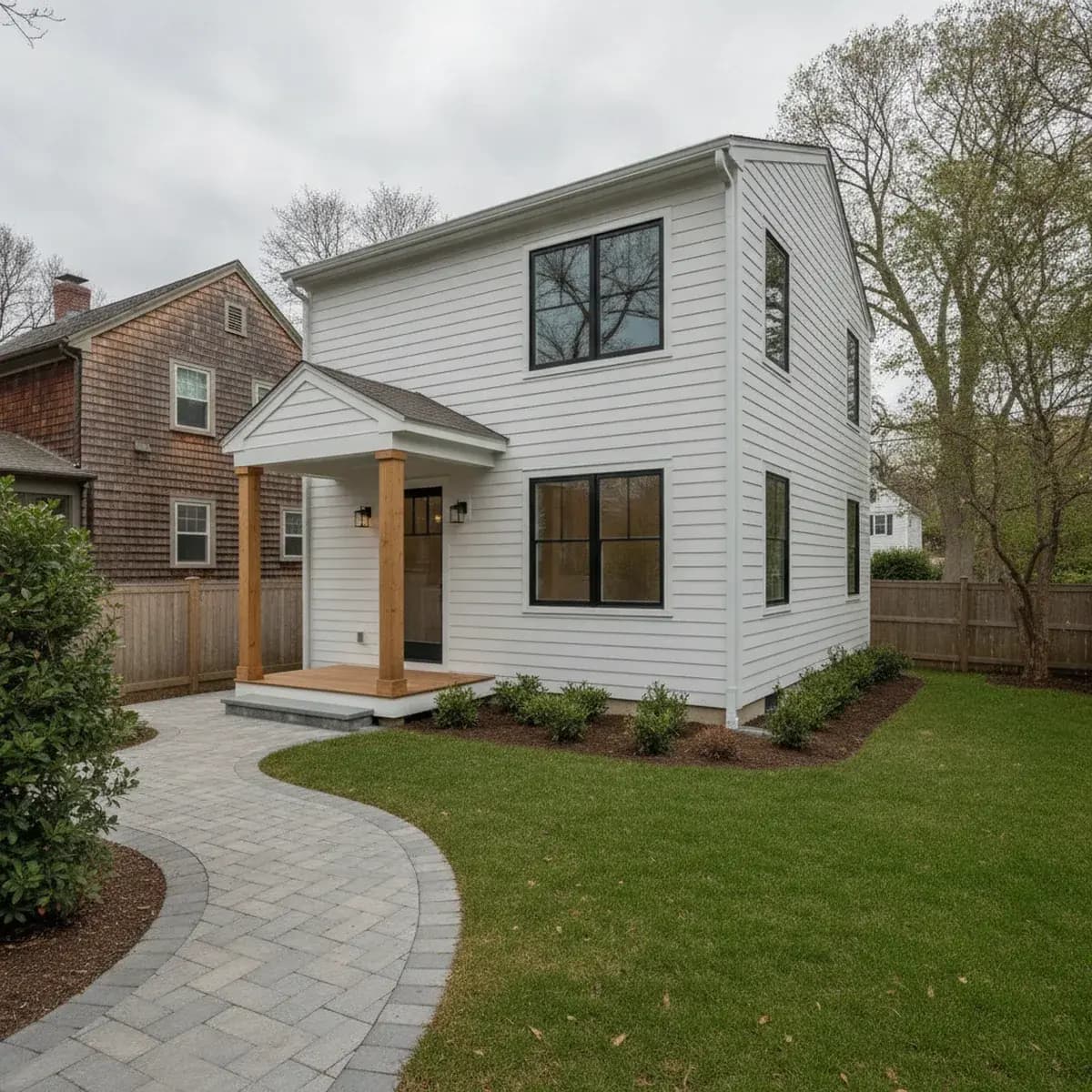
A paver patio is one of the most popular outdoor projects on Cape Cod. It gives you a dry, level place for a grill and a table, it handles sandy feet coming back from the beach, and done right it holds up through freeze and thaw for many years.
Price is the part that confuses most people, because two quotes for the same size patio can be far apart. This guide breaks down what installed paver patios typically cost in 2026 and exactly where that money goes.
Typical installed paver patio cost in 2026
National cost guides put installed paver patios at roughly $8 to $25 per square foot, depending mainly on the paver you choose. Lawn Love lists a national average near $3,350 for a 280 square foot patio, with most projects between about $2,275 and $6,950.
Those are national figures. In coastal Massachusetts, labor and material delivery often push projects toward the middle or upper end, and larger patios with steps, curves, or seat walls can go well past those totals. Use the ranges for budgeting, then get a site-specific estimate.
Where the money actually goes
A paver patio has three big cost buckets. The pavers themselves typically run from a few dollars per square foot for standard concrete pavers to $12 or more for natural stone or premium styles. The base, meaning excavation, gravel, compaction, and bedding sand, commonly adds about $2 to $6.50 per square foot. Labor is the largest and most variable piece.
Then come the details people forget: edge restraint, polymeric sand in the joints, cuts around the house and steps, and removing the soil and sod that come out of the hole. A detailed quote lists each of these so you can see what you are paying for.
Why base prep matters so much on Cape Cod
Cape Cod soil is mostly sand. It drains fast, which is good, but loose sand shifts if it is not dug out and replaced with a properly compacted gravel base. Skipping depth on the base is the most common reason patios sink, heave, or develop low spots that hold water.
Frost is the other enemy. Even with milder coastal winters than inland Massachusetts, the ground freezes and thaws repeatedly. A well-compacted base that drains away from the house keeps pavers from lifting each winter. If a quote is far cheaper than the others, ask how deep the base will be and how it will be compacted.
Choosing pavers for salt air and sandy feet
Near the water, salt spray and road salt are a fact of life. Dense concrete pavers and many natural stones handle it well, while very porous or cheap products can scale over time. A sealer can help, though it adds cost and needs renewing every few years.
Color is also practical here. Lighter pavers stay cooler on summer afternoons, which matters if kids are walking barefoot from the pool or beach. Textured surfaces are less slippery when wet. A permeable paver system is another option on lots where you want rain to soak in instead of running toward the house.
Factors that raise or lower your price
Size is the obvious one, but larger patios often cost less per square foot because setup and delivery are spread over more area. Shape matters next: straight edges are faster to build than curves with many cuts.
Grade changes push costs up, since a sloped yard may need steps or a small retaining wall to create a level surface. Access matters too. If equipment cannot reach the backyard, more of the digging and gravel moving is done by hand. Removing an old concrete slab or deck first also adds time and disposal.
Patio add-ons and how they change the budget
Many Cape Cod patios grow beyond a simple rectangle once the planning starts. A seat wall along one edge, a fire pit, a short set of steps down from a deck, or low-voltage lighting in the joints can all make the space more usable, and each adds its own material and labor cost. Seat walls and steps in particular are priced closer to retaining wall work than to flat paving.
Drainage is another common add-on. On lots where the yard slopes toward the house, a patio may need to be pitched carefully away from the foundation, with a channel drain or a dry well to catch runoff. It is much cheaper to plan this at the start than to fix a wet basement later.
If the budget is tight, a good approach is to build the patio itself correctly now, with a full base and proper edging, and add the seat wall, lighting, or fire pit in a later season. A well-built base is the one thing you cannot easily upgrade later.
Getting a quote you can compare
Ask each contractor to list the patio size, paver product, base depth, edging, joint material, and how soil will be removed. With those lines in front of you, the reason for any price gap becomes obvious.
Best Cape Cod Landscaping gives free estimates with no visit fee across every town on the Cape, and we are insured. If something is not right after the job, we come back and redo it at no cost.
Frequently asked questions
- How much does a paver patio cost per square foot installed?
- Most installed paver patios typically cost about $8 to $25 per square foot in 2026, according to national cost guides. Standard concrete pavers sit at the lower end, natural stone and premium styles at the higher end, and coastal Massachusetts labor often lands in the middle or upper part of that range.
- How much does a 12 by 12 paver patio cost?
- A 144 square foot patio at typical installed rates of roughly $8 to $25 per square foot would land somewhere around $1,150 to $3,600 before extras like steps, curves, or old slab removal. Small patios often cost a bit more per square foot because setup costs are spread over less area.
- Are pavers a good choice near the ocean?
- Yes, when you pick a dense paver and build a good base. Quality concrete pavers and many natural stones handle salt air well, and individual pavers can be lifted and reset if anything shifts, which is harder with poured concrete.
- Why do patios sink on Cape Cod?
- Usually because the sandy native soil was not dug out and replaced with enough compacted gravel. Loose sand moves, and freeze and thaw cycles then lift or settle the pavers. A proper base is the single biggest factor in how long a patio lasts.
- When is the best time to build a patio on Cape Cod?
- Spring through late fall works well. Many homeowners book fall installs so the patio is ready for the next summer season, as long as the ground is not frozen.
Related services
Found this helpful? Make us a preferred source on Google.
Ready for an exact price?
Get a free, no-pressure in-home estimate. Real numbers for your home, not a phone guess.