
Bourne and Buzzards Bay Yards: Wind, Salt and Tree Care
· By Ronaldo Silva
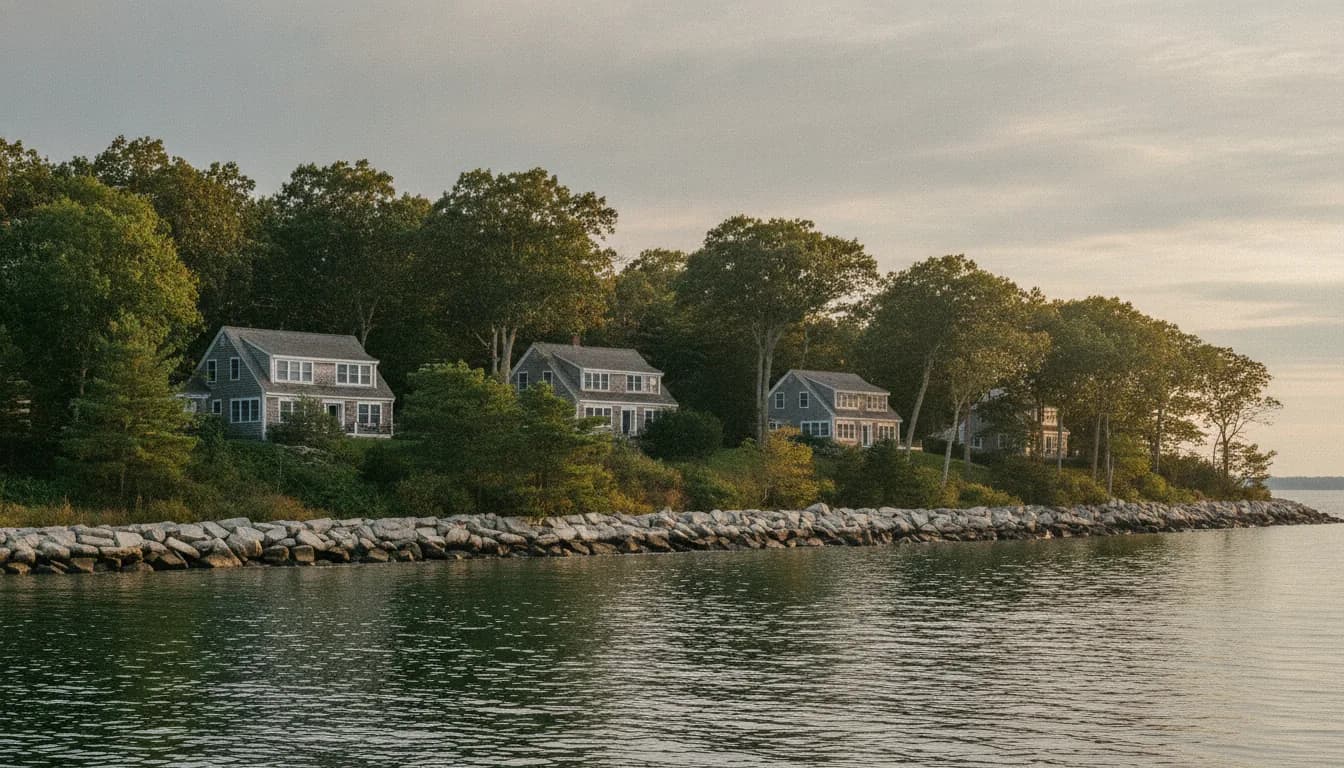
Owning a yard in Bourne means dealing with weather that most Cape towns only see a few times a year. The town sits at the west end of the Cape Cod Canal, where the summer southwest breeze funnels in off Buzzards Bay, and boaters know that stretch for wind that builds fast in the afternoon. Your trees, hedges and lawn feel that same push every day of the season.
This guide is for homeowners in Buzzards Bay, Sagamore, Pocasset, Cataumet, Monument Beach and Bournedale who want to understand what that exposure does to a property over time. We cover how wind and salt wear down trees, how to decide between pruning and tree removal, which jobs a homeowner can handle, and a simple storm prep routine before nor'easter season.
How Canal Wind Shapes a Bourne Yard
Wind does more than knock things over. A steady breeze pulls moisture out of leaves and grass, so lawns near open water dry out faster than lawns a mile inland, even with the same watering.
Look at the trees on your lot from the street. If the tops all lean one direction and the windward branches are short or bare, the tree has adapted to the wind. That is fine as long as the trunk is solid and the roots are anchored. The trouble starts when a tree that grew up sheltered suddenly loses its neighbors to clearing or construction and takes the full wind for the first time.
If your tree line recently opened up, have the remaining trees looked at before the next big blow.
Salt Exposure Along the Buzzards Bay Shore
In Monument Beach, Pocasset and Cataumet, salt rides in on the spray and settles on leaves and needles. The damage usually shows on the side facing the water: browned needle tips on pines, scorched edges on maple and oak leaves, and shrubs that look healthy on the back but thin on the front.
A few habits help. Rinse foundation plantings with fresh water after a heavy onshore storm if you can. Mulch beds to keep roots cooler and moisture steadier. When you replace something that keeps failing, choose a plant that tolerates salt instead of fighting the site. Pitch pine, eastern red cedar and many native shrubs handle spray far better than ornamentals that come from inland nurseries.
Salt browning alone does not mean a tree is dying. Many trees push out new growth the following spring. Give it a season before deciding, unless the trunk or roots also show problems.
Prune or Remove? How to Tell
Most trees on a Bourne lot need pruning, not removal. Pruning makes sense when the problem is limited to certain branches: deadwood in the crown, a limb rubbing the roof, branches crossing each other, or a canopy so dense that wind cannot pass through it. Thinning a crown lets wind move through instead of catching it like a sail, which is one of the best things you can do for trees in an exposed spot.
Removal is usually the right call when the problem is in the trunk or roots. Warning signs include a trunk that is cracked or split, large cavities or soft wood near the base, mushrooms growing from the roots or lower trunk, a lean that has gotten worse recently, soil heaving on one side after a storm, or a tree that is more than half dead. A tall pine with shallow roots leaning toward the house is a common example around Bourne's wooded neighborhoods.
When you are on the fence, think about what the tree can hit. A questionable tree at the back of a large lot can often wait. The same tree over a bedroom, driveway or power line deserves a closer look now. If the tree stands in the public way along the street, Massachusetts law gives the town tree warden authority over it, so check with the town before any work.
Village by Village: What to Watch
Buzzards Bay village and Sagamore sit right along the canal, so wind and tight lots near busy roads are the main concerns. Keep hedges trimmed narrow at the top so they shed wind and snow.
Pocasset, Cataumet and Monument Beach face the bay, with coves, marsh edges and coastal banks. Salt and storm surge are the big factors, and any clearing near a wetland or bank may need Conservation Commission review before work begins. Bournedale and the wooded parts of the other villages deal more with mature oak and pine, sloped sandy ground and heavy leaf and needle drop each fall.
A Simple Storm Prep Routine
Late summer and early fall are the best time to get ready. Hurricane season peaks in September, and nor'easters start showing up in October and November. Walk the property and note any dead branches, hangers caught in the canopy, and limbs within a few feet of the roof, gutters or service wires.
Clear gutters and drains so heavy rain moves off the property, tie down or store patio furniture, and pick up loose items that wind can throw. If you have a tree you have been worried about, deal with it before the storm, not after. Emergency work after a storm costs more and takes longer because every crew on the Cape is busy at once. After a storm, stay clear of anything touching a wire and call the utility.
What You Can Do Yourself and When to Call a Pro
Homeowners can safely handle small pruning from the ground with hand pruners or a pole saw, raking and bagging debris, mulching, watering new plantings and rinsing salt off shrubs. Cut small branches just outside the collar, the swollen ring where branch meets trunk.
Anything that needs a ladder and a chainsaw at the same time, any limb near a wire, and any tree tall enough to reach a structure is work for an insured crew. Heavy limbs swing and roll in ways that are hard to predict.
How We Help Bourne Homeowners
Best Cape Cod Landscaping is based in Mashpee and serves every town on Cape Cod, including all of Bourne on both sides of the canal. We handle tree pruning and removal, storm cleanup, fall leaf and needle cleanup, lawn care and hardscaping. Our crews are insured, the estimate is free and there is no visit fee.
We offer same-day service when the schedule allows, which helps when a storm leaves a limb hanging over the house. If something is not right after we finish, we come back and redo it at no cost. If you are unsure whether a tree should be pruned or removed, ask for a free estimate and we will walk the yard with you and explain the options.
Frequently asked questions
- How do I know if a tree in Bourne should be removed instead of pruned?
- Removal is usually needed when the trunk or roots are the problem: deep cracks, cavities or soft wood near the base, mushrooms at the roots, a lean that is getting worse or a tree that is mostly dead. If the issues are limited to certain branches, pruning or crown thinning is usually enough.
- Do I need a permit to remove a tree in Bourne, MA?
- Trees in the public way along the street fall under the town tree warden under Massachusetts law, so do not cut them without checking with the town. Work near wetlands, marshes or coastal banks may also need Conservation Commission review. Trees well inside a private lot away from those areas usually do not need a permit, but it is worth confirming with the town first.
- When is the best time to prune trees near Buzzards Bay?
- Late summer and early fall work well for storm prep because you can remove deadwood and thin the crown before hurricane and nor'easter season. Many trees can also be pruned during dormancy in late winter. Dead or hazardous limbs should be handled as soon as you notice them.
- Why are the needles on my Bourne pine turning brown on one side?
- Browning on the side facing the water is often salt spray damage after a strong onshore wind. Many pines recover with new growth the next spring. If the browning spreads through the whole tree or comes with trunk or root problems, have it checked.
- Is there a cost to get a tree estimate in Bourne?
- No. Best Cape Cod Landscaping gives free estimates with no visit fee anywhere on Cape Cod, including every village in Bourne.
Related services
Found this helpful? Make us a preferred source on Google.
Ready for an exact price?
Get a free, no-pressure in-home estimate. Real numbers for your home, not a phone guess.